2026-09-13 ·
Winter Dumpster Rental Tips For Boulder Residents
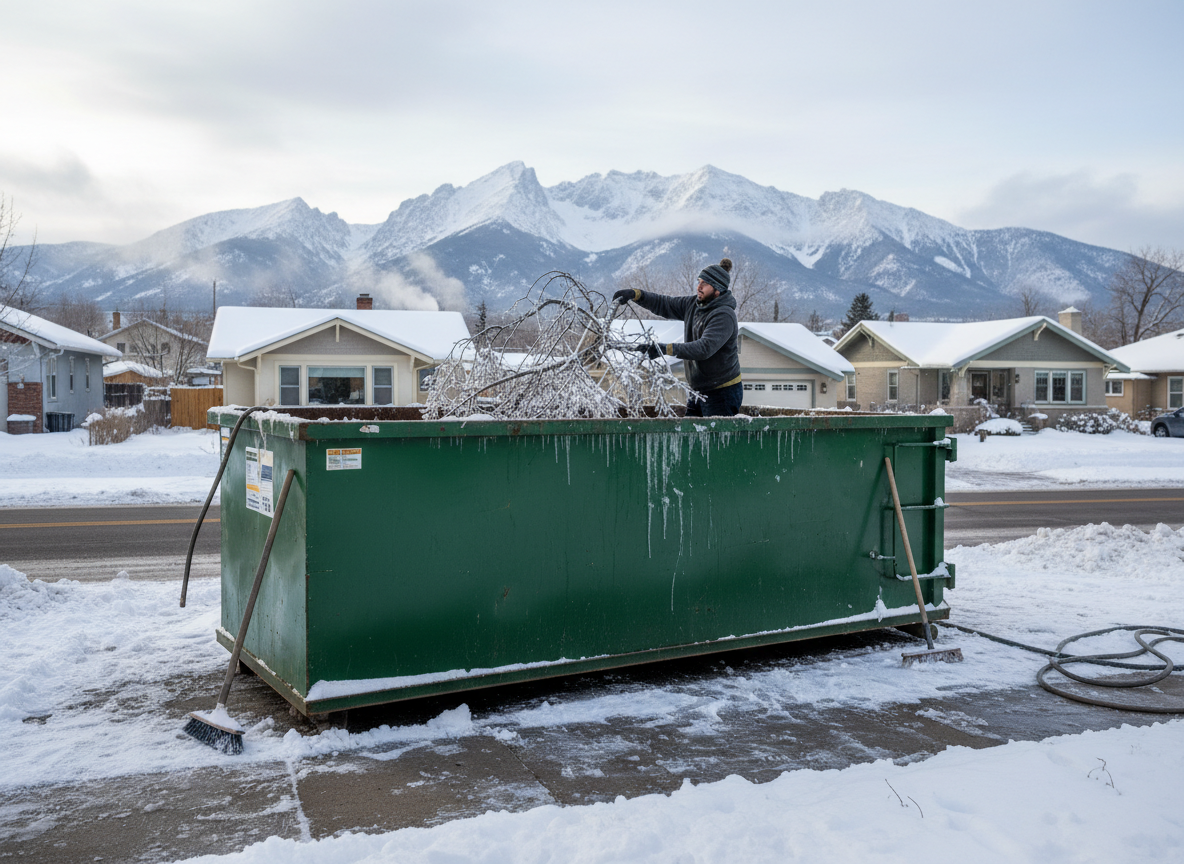
Winter dumpster rental in Boulder works best when you prepare the drop site for snow and ice before the unit arrives and schedule around the county's heavy snowfall months from November through March. Cold temperatures and low precipitation create packed snow and frozen soil that limit truck maneuverability on gravel driveways and unpaved roads common in Boulder and surrounding Jefferson County neighborhoods.
Preparing the Drop Site for Snow Accumulation
Clear a 10-foot-wide path from the road to the placement spot at least two days before delivery so the roll-off truck can back in without sliding on ice. In Boulder, where older homes often sit on sloped lots with gravel or dirt driveways, shovel or plow the area and spread sand or gravel to improve traction. Mark underground utilities and septic lines with flags because frozen ground hides them and the weight of a loaded dumpster can cause shifting. Residents near Helena or Butte routes should also account for wind-packed drifts that form along fence lines and can block access after a single storm. Removing low branches and moving vehicles the night before prevents delays when the driver arrives at your scheduled 24/7 window.
Managing Frozen Ground and Terrain Challenges
Frozen soil in Jefferson County makes leveling the dumpster difficult on uneven rural properties, so request plywood or gravel boards under the wheels during booking. Boulder terrain includes rocky outcrops and drainage ditches that fill with ice, increasing the risk of the container tipping when loaded. Place the unit on the most level section of your driveway or yard and avoid soft spots near septic fields that thaw unevenly. If your cleanup involves yard waste, check the Yard Waste Dumpster Rental page for containers designed with lower sides that are easier to load in heavy coats and gloves. Crews report that January rentals often require extra time to position units safely compared with milder months.
Choosing Dumpster Size for Winter Projects
Select a 20- or 30-yard container for most Boulder residential cleanouts because smaller loads fit better when snow limits how far you can throw debris. The How To Choose Dumpster Size For A Rural Montana Cleanup guide explains that cold weather reduces volume as materials freeze together, so you may fill the same physical space with less weight. Measure your items before calling and add 10 percent extra capacity to account for ice buildup on the load. Homeowners in areas like Clancy or Montana City often need the larger size when clearing garages or sheds after the first heavy snow because access to outbuildings becomes limited.
Scheduling Deliveries Around Local Weather
Book at least 48 hours ahead during peak winter months because storms moving between Butte and Helena can close secondary roads in Jefferson County for a full day. Everyday Dumpster Rental Boulder operates 24/7, but drivers prioritize routes with the least ice accumulation, so morning deliveries after a clear night work best. Check the forecast for temperatures below 20 degrees, which can freeze hydraulic lines and extend placement time. If your project runs into spring thaw, plan an extra pickup day because melting snow turns driveways muddy and may require the truck to approach from a different angle.
Safety Steps and Permit Considerations
Wear traction cleats when loading the dumpster and keep the area around it salted to prevent slips on compacted snow. Secure tarps over the load each evening so wind does not scatter lightweight debris across neighboring properties. Before ordering, review local rules in the Do You Need A Permit For A Dumpster In Boulder article to confirm placement on public right-of-way is allowed in your neighborhood. Proper winter planning keeps the rental on schedule and protects both your property and the driver working in low light and cold conditions typical of Boulder winters.